If you have been priced out of the East Bay but still want a Northern California rental investment, Stanislaus County may already be on your radar. The big question is whether the numbers, housing stock, and day-to-day ownership realities actually fit your goals. In this guide, you’ll get a practical look at pricing, rental demand, property types, and local management factors so you can decide whether Stanislaus County belongs on your short list. Let’s dive in.
Why Investors Look at Stanislaus County
For many investors, the appeal starts with lower entry pricing than the East Bay. In Stanislaus County, the median home value is $450,100 based on 2020 to 2024 ACS estimates, while Zillow shows an average home value of $467,963 and a median sale price of $460,000 as of April 30, 2026. That is a very different pricing environment from nearby Alameda County, where the median owner-occupied home value was $1,090,100.
Rents are lower too, but so is your acquisition cost. ACS estimates place median gross rent at $1,623, while Zillow reports an average asking rent of $2,028. Since those figures come from different methods and time periods, it makes sense to treat them as a range rather than one exact market rent target.
This creates a different investment conversation than you might have in coastal markets. Stanislaus County is not a luxury-priced, high-barrier market, but it may offer a more approachable path if you want to buy and hold in Northern California.
Stanislaus County Market Basics
The county has 556,972 residents and 177,874 households, with an average household size of 3.08. The owner-occupied housing rate is 61.2%, and median household income is $81,468. Those numbers point to a large, established, middle-income housing market with steady everyday housing needs.
Demand pressure also looks real. Stanislaus County’s housing report says the population grew from 512,469 in 2011 to 550,842 in 2021 and is projected to reach 560,815 by 2031. The same report says the housing vacancy rate was 4.4%, which is below California’s 7% plus range noted in the report.
Another important signal is renter strain. Nearly half of renters were cost-burdened in 2021, according to the county housing report. That does not guarantee future rent growth, but it does suggest that rental housing remains an important part of the local housing system.
What Supply Conditions Mean for Investors
Supply has not been growing quickly. The county reports that new housing construction fell 83% from 2000 to 2009 compared with 2010 to 2019. Census data also show 902 building permits in 2024, which supports the view that new supply is not arriving at a pace that would quickly erase existing market pressure.
At the same time, much of the housing stock is older. Nearly half of all housing units in the county are more than 40 years old. For you, that can mean more maintenance planning, but it can also open the door to improvement-driven upside.
This is one of the clearest tradeoffs in Stanislaus County. You may find more attainable purchase prices, but you often need to be comfortable with older homes, deferred maintenance, or renovation work.
Best Fit Property Types
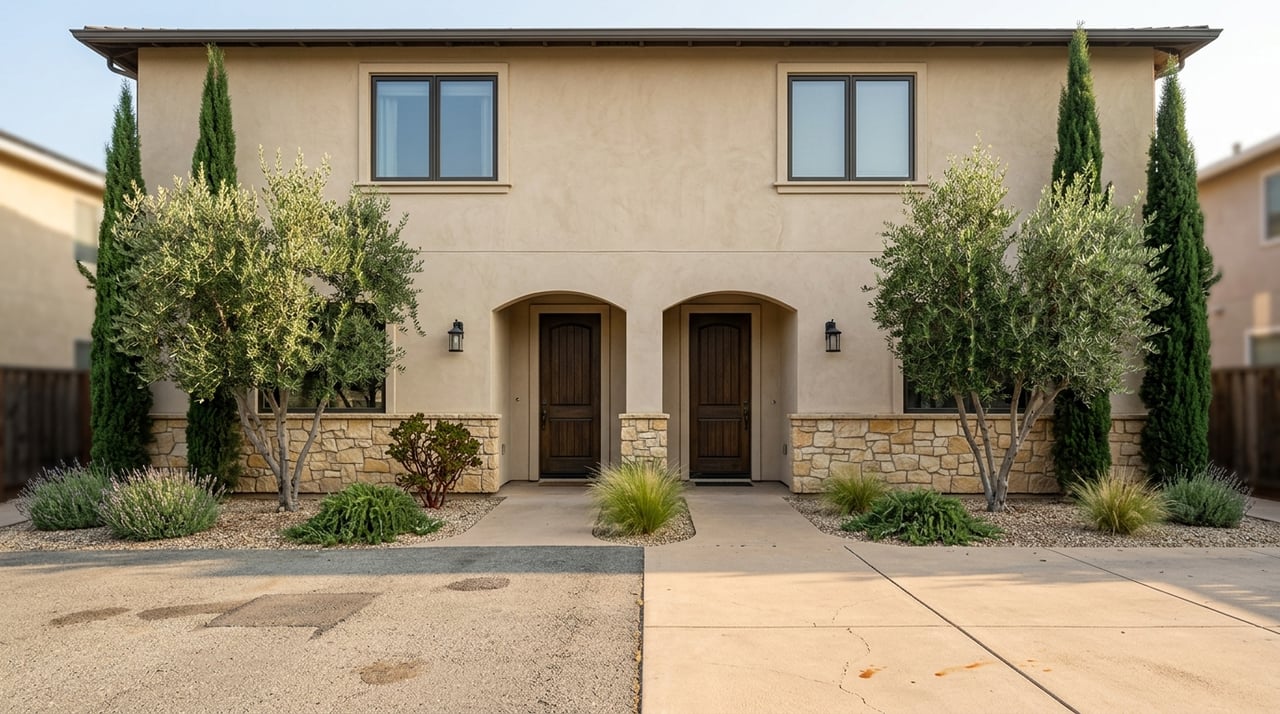
Single-unit housing dominates the county. According to the county housing report, 80% of the housing stock is single-unit structures, while buildings with 20 or more units account for just 6%. Smaller multifamily types like duplexes, triplexes, fourplexes, and smaller apartment buildings have declined since 2010.
That matters because your most common investment path here may not be a classic small multifamily play. Instead, many buyers will be looking at single-family rentals, older homes with renovation potential, or limited small multifamily opportunities where available.
In simple terms, Stanislaus County appears better suited to investors who are open to single-family rental strategy first, rather than counting on a deep pipeline of small multifamily inventory.
Where Submarket Selection Matters
Not every part of the county behaves the same way. Modesto accounts for about 40% of the county population, while Turlock represents about 13%, Ceres 9%, and unincorporated areas about 20%. That spread alone shows why local market selection matters.
Home values also vary by city. Zillow’s city-level figures place typical values at roughly $432,000 in Keyes, about $447,000 in Modesto, around $485,000 in Turlock, about $486,000 in Riverbank, and roughly $553,000 in Hughson. If you are comparing cash flow, renovation budget, or long-term appreciation potential, these differences can shape your strategy.
A lower-price entry point may work better for one investor, while another may prefer a market with a different inventory mix or location profile. The key is not to treat Stanislaus County as one uniform rental market.
Value-Add Opportunities to Watch
One of the most interesting opportunities in Stanislaus County is the potential to add units through ADUs or JADUs. County planners describe ADUs as an affordable housing type because they avoid land and major infrastructure costs, and Stanislaus County allows ADUs in unincorporated areas.
Several jurisdictions also offer free pre-approved ADU plans, including Ceres, Modesto, Oakdale, Riverbank, Turlock, and Waterford. For investors focused on single-family homes, this can be one of the clearest ways to create additional rental utility without pursuing a larger redevelopment project.
For older homes, a more typical value-add path may be a cosmetic or systems-focused rehab. Given the county’s aging housing stock and the relative scarcity of smaller multifamily formats, straightforward improvements may be more practical than assuming major redevelopment upside.
Day-to-Day Ownership Considerations
Stanislaus County does not look like a market built for fully passive ownership. Because the county includes multiple cities plus unincorporated areas, and because planning and housing conditions can vary, local execution matters.
The resident profile also shapes operations. Census data show that 43.0% of residents speak a language other than English at home, and the average household size is 3.08. In practical terms, bilingual leasing support, translated notices, and layouts that function well for larger households may matter more here than in a more transient or smaller-household market.
If you are investing from outside the area, strong local support becomes even more important. A hands-on approach, or a reliable local manager and contractor network, may help you protect the asset and respond faster when issues come up.
California Rules You Need to Underwrite
Before you buy, make sure you understand how California’s Tenant Protection Act may apply to the specific property. The California Department of Justice says AB 1482 generally limits rent increases and requires just cause after 12 months for covered properties.
Some single-family homes and condos may be exempt, but only if ownership and written-notice conditions are met. The same state guidance notes that local laws may add protections, so coverage should be verified at the parcel and city level before you finalize your numbers.
This step matters because legal assumptions can change your cash flow model. A property that looks attractive on paper may look different once you confirm rent cap rules, notice requirements, and local conditions.
So, Is Stanislaus County a Good Fit?
For the right investor, yes. Stanislaus County may be a good fit if you want lower acquisition costs than the East Bay, can work with older housing stock, and are open to creating value through single-family turns, ADUs, or scarce small multifamily opportunities.
It may be less attractive if you are expecting coastal-style rent levels, brand-new inventory, or a completely hands-off experience. This market appears to reward local knowledge, careful underwriting, and a practical plan for renovations or management.
If your goal is to find a Northern California rental market that offers more approachable pricing while still giving you room to improve and reposition property, Stanislaus County is worth a serious look. The best results usually come from choosing the right submarket, understanding property condition upfront, and building a strategy around realistic operations rather than assumptions.
If you want help evaluating a Stanislaus County opportunity, comparing submarkets, or assessing the upside in a single-family, rural, or land-adjacent property, Lori Cabral offers hands-on guidance, local market insight, and full-service support from analysis through negotiation.
FAQs
Is Stanislaus County more affordable than the East Bay for rental investors?
- Yes. Stanislaus County home values and rents are materially lower than Alameda County benchmarks, which can create a lower entry point for investors.
What property type is most common in Stanislaus County for rental investing?
- Single-unit housing is the dominant property type, making single-family rentals one of the most common investment paths in the county.
Are small multifamily properties common in Stanislaus County?
- Not especially. The county housing report says duplexes, triplexes, fourplexes, and smaller apartment buildings have declined since 2010, so smaller multifamily inventory is relatively scarce.
Can you add an ADU to a rental property in Stanislaus County?
- In some cases, yes. Stanislaus County allows ADUs in unincorporated areas, and several local jurisdictions offer free pre-approved ADU plans.
Does older housing stock create opportunity in Stanislaus County?
- It can. With nearly half of housing units more than 40 years old, some properties may offer upside through cosmetic updates or systems-focused improvements.
What should out-of-area investors know about managing rentals in Stanislaus County?
- Local support matters. Because the county includes multiple cities and unincorporated areas, investors often benefit from strong local management, contractor coordination, and careful city-level due diligence.
Do California rent rules matter for Stanislaus County investors?
- Yes. AB 1482 may limit rent increases and require just cause for covered properties, so you should verify property-level and city-level rules before underwriting a purchase.